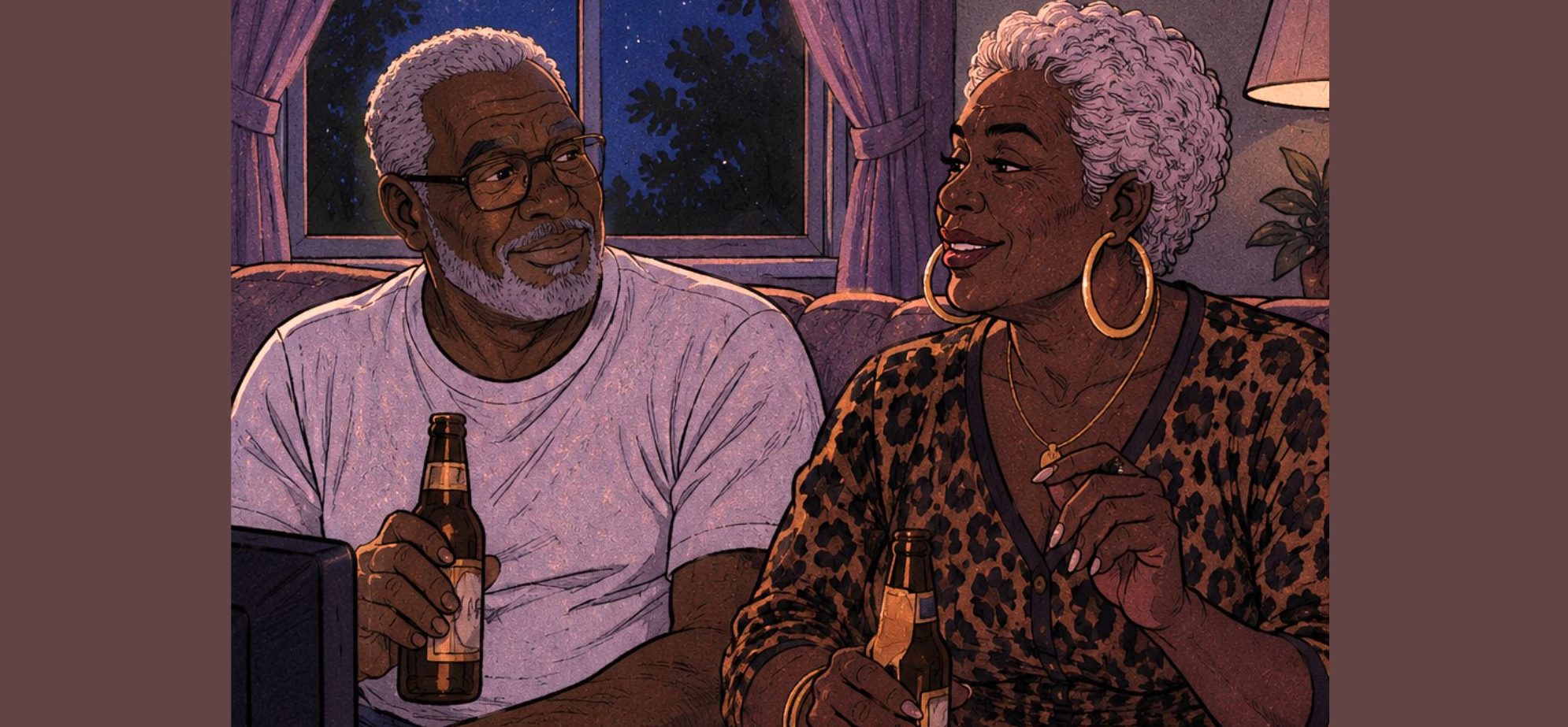
Are You in Love or Just Programmed?
One of the most confronting truths about modern dating is that many of us are not actually choosing the people we fall in love with—we’re following conditioning. A script we inherited long before we ever had our first crush. A script shaped by gender roles, religious teachings, romantic myths, family expectations, and cultural pressures about what “masculine” and “feminine” are supposed to look like. The question isn’t “Do I love them?” but “Do I love what I was conditioned to want?”
Our collective understanding of love didn’t emerge organically; it was crafted. The Medieval courtly love movement romanticized submissive women and heroic men, painting attraction as a gendered power dance. Men were portrayed as active agents of destiny. Women were idealized, yet so passive that they could only hope and pray destiny would embrace them warmly.
This trained women to expect rescue. Men, on the other hand, barreled down the road of fantasy, creating and worshipping images of the perfect woman and losing their ability to appreciate raw and real ones.
The Victorian era enforced domestic purity for women and emotional stoicism for men, codifying marriage as duty rather than connection. And the 1950s post-war domestic boom pushed a mass propaganda campaign encouraging women to return to the home while men reclaimed the workforce, cementing gender-coded labor.
These movements weren’t about love or family stability—they were about social order and human resource extraction.
Conditioning Shapes What We Think Is “Masculine” or “Feminine”
Because of this long history, most people today mistake conditioning for preference. We think a man is “manly” when he pays all the bills, doesn’t cry, and takes charge. We think a woman is “feminine” when she’s quiet, yielding, nurturing, and adorned for someone else’s delight.
But desire follows belief. And belief is built from indoctrination.
When you’ve been taught that masculinity equals dominance, you think you’re attracted to dominance. When you’ve been told femininity equals submission, you think submission is sexy.
Gender role conditioning doesn’t just shape how we behave in relationships. It shapes what we see as beautiful or handsome. From childhood, we’re taught that certain traits belong to men and others to women, and those traits become the baseline for what we’re “supposed” to find attractive.
Boys are praised for toughness, stoicism, and strength; girls are praised for softness, beauty, and compliance. By the time we reach adulthood, many of our preferences are not personal at all—they’re inherited. We end up mistaking gender performance for genuine chemistry.
This conditioning runs so deep that people often confuse cultural ideals with biological attraction. Depending on the decade, men are told that beauty means slim waists, big boobs or butts, quiet voices, long straight hair, perfect skin, and youthfulness. Anything outside that mold is labeled unfeminine.
Women are told that handsomeness means height, muscle, a baritone voice, dominance, and financial power. So gentle men, short men, emotionally expressive men, and men who aren’t millionaires get dismissed as “low value”.
No one’s asking you to marry a bum or someone who makes your stomach turn. I’m simply inviting you to crack the door of possibilities, to consider that your ideas about attractiveness may be unnecessarily narrow. These patterns of conditioning limit the richness of who we allow ourselves to build lives with.
When we question these scripts, an entirely new landscape of beauty emerges. People start noticing soulfulness instead of performance, authenticity instead of gendered theatrics. Women discover that tenderness in a man can ignite more passion than dominance or performative masculinity. Men realize that confidence or intelligence can be more captivating than a tiny waist and a feminine act. When we peel away the conditioning, we realize we’ve been living inside someone else’s idea of beauty—and that our true attractions may be far more expansive, diverse, and liberating than we ever knew.
The Rise of Masculinity and Femininity Training—and Why It’s Keeping Us Small
Social media is oversaturated with instructional content on masculinity and femininity. I believe there is a deep and abiding spiritual purpose for masculine and feminine energies in our world. But they’ve been inverted for exploitation and to limit our collective progress.
This too often leads to polarization and energetic vampirism. People slap on disguises, jump in the Dating Hunger Games, and duke it out for a false prize—the chance to drain another human being of their divine resources. These frameworks often claim to improve life and partnerships. But in reality, they reinforce the same old scripts wrapped in spiritual language. People become caricatures of gender instead of expanding into full-spectrum humans.
Religious Conditioning: The Original Gender Script Generator
Major world religions have wielded a heavy hand in shaping gender expectations around love. Christianity, Islam, Hinduism, and Judaism all contain doctrines assigning men authority and women obedience. Religious scriptures frequently portray men as leaders and providers, while placing women in roles of servitude, chastity, sacrifice, and self-abandonment. Even if a woman is not religious today, religious residue still shapes the culture she dates in.
When people feel pulled toward partners or dynamics outside the “approved” script, shame creeps in. This shame is often reinforced by the religious guilt that pervades much of our programming. Dating outside the norm, then, doesn’t just become unusual. It falls short of God’s perceived “best”.
Men who are attracted to full-bodied women, assertive women, nerdy women, or loud, boisterous women often hide it for fear of ridicule. Women who prefer gentle men, emotionally sensitive men, or men who don’t perform dominance often hide those desires too.
These attractions are not fringe. They are human, yet we treat them like secrets and deficiencies. Variety is the spice of life, and nature is replete with it. Yet we insist on trying to shove earth’s 8 billion+ people into the same tiny box of ideals. That makes for such a small world to live in—small and sad!
When Attraction Diverges from Stereotype (Examples We Don’t Like to Talk About)
In a world without gender scripts, preferences like these would be ordinary—not kinks, not confessions, not proof that something is “wrong”:
- A man who loves strong, muscular women.
- A woman who prefers caregiving men over status-chasing “alpha” types.
- A man who likes women who don’t shave.
- A woman who finds emotional vulnerability in men deeply erotic.
- A man who prefers women who initiate sex.
- A woman who prefers men who are followers rather than leaders.
- A man who likes older women with life experience, wisdom, and unyielding confidence.
- A woman who finds quiet men far more appealing than loud ones.
- A man who loves women with deep, sultry voices and bold laughter rather than soft girly voices and coy giggles.
- A woman who wants a man who can cook.
- A man who finds intellectual, assertive, debate-loving women deeply sexy.
Many people don’t know what they genuinely want because they’ve never been given permission to want freely. The brain learns what to desire through repetition and reward. And culture has rewarded us for choosing partners who fit traditional gender norms—even when those patterns harm us.
Scripted Attraction Reinforces Imbalanced Labor
When attraction depends on rigid gender roles, relationships become imbalanced by design. The “strong man” who never shows emotion tends to avoid emotional labor. The “feminine woman” who is always nurturing often becomes the default caretaker. Scripts create predictable, exhausting patterns where women over-function and men underwhelm.
But what happens when we rewrite the Script? Everything becomes possible. When men stop feeling pressured to provide everything financially, they become more emotionally available and stable, more present with their partners and children. When women stop being default domestic workers, entire household systems become more equitable. When both partners abandon roles in favor of authenticity, relationships become more creative, sustainable, interesting, and intimate. People’s genuine gifts and talents see the light of day as they apply them to make their lives and households better.
Imagine a relationship where responsibility is shared—not according to some robotic 50/50 division of labor, but authentically, based upon the true needs, desires, and skills of the partners. Here, care flows in both directions, attraction is based on truth instead of tradition, and both partners are free to show strength, softness, power, vulnerability, and maturity—to be well-rounded human beings. Imagine partnerships where women aren’t burned out, men aren’t emotionally isolated, and both people hold space for each other’s evolution.
This isn’t utopia; it’s simply what becomes possible when we stop performing gender.
Love Without Inherited Scripts Is More Sustainable
When conditioning falls away, relationships shift from obligation to choice. Partners meet each other as equals, not archetypes. They negotiate labor based on capacity, not gender. They work together as teammates rather than performers of outdated roles. And as a result, attraction flows more freely—because it’s based on reality, not fantasy.
Desire and fulfillment expand when people do. The more a person expands beyond the scripts they were handed, the more space they create for authenticity. Women find themselves drawn to men who nourish, not dominate. Men discover eroticism in partnership, not possession. Everyone becomes more attuned to joy, connection, and reciprocity.
This is the heartbeat of my ethos, the roots running deep beneath my Garden of Evolution, which includes my new book and journals, the Renegade Singles group, my quiz for singles, and my Gender Role Roulette game. When we choose authenticity over conditioning, sovereignty over submission, and curiosity over shame, we open the door to relationships that honor who we truly are—not who we’re constantly told to be.