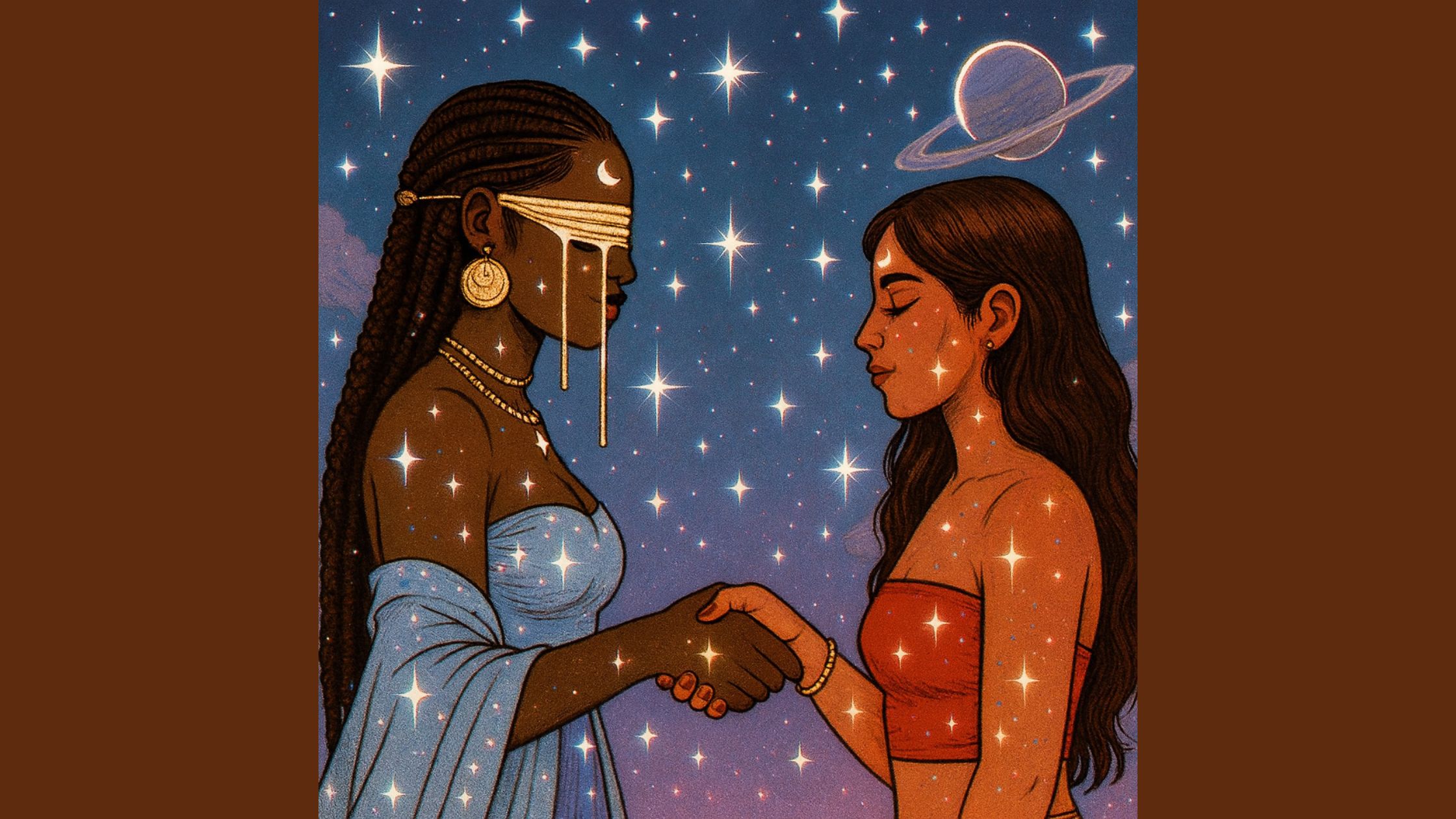
A Strange Pattern in Religion & Mythology: Where Are the Gods Who Loved Women?
Why is it that across thousands of years, hundreds of cultures, and countless mythologies, we find almost no male gods who were known for genuinely loving, protecting, or advocating for women?
It’s one of history’s quietest mysteries—one we rarely stop to question. If divinity is meant to represent humanity’s highest ideals, then why does the mythological record show such a striking lack of compassion for half the human population?
When we scan the ancient pantheons, we find male deities of war, sky, storms, agriculture, sexual conquest, and cosmic law—but shockingly few who are remembered for uplifting or safeguarding women. If women were made the “fairer” sex, with the noble purpose of nurturing, bringing forth, and cultivating life, then why create a world determined to harden them at every turn? If they were meant to be the soft ones tasked with civilizing the world’s societies, you’d think these same gods would have put protective measures in place to preserve their honor. If the stories are to be believed, the male gods distinctly chose to do no such thing.
A Universal Absence: No Culture Gave Women a Divine Protector in Male Form
Ares, the Greek god of war, is occasionally noted as one of the only major male gods who did not have a pattern of sexual aggression toward women. But even Ares—despite moments of restraint—did nothing notable to support women’s well-being, autonomy, or safety. His neutrality becomes remarkable only because the bar is so low.
A handful of male figures brushed against the idea of compassion toward women, but even they fall short of true advocacy. In Hindu tradition, Krishna is sometimes celebrated for his playful affection and emotional intimacy with the Gopis, yet these narratives still center male desire over female safety or autonomy. In Egyptian mythology, Osiris shows respect for Isis, but his reverence is personal, not political—he never becomes a protector of women at large.
These stories highlight a pattern: admiration for a particular woman, perhaps; lust for many women, absolutely; but no structural commitment to women as a group—despite overwhelming power and a clear understanding of how the world works.
Even if one doesn’t believe in deities at all, this collective absence is culturally significant. Considering that so much of our concept of male-female relationships is based on ideas pulled from religious or spiritual texts, this is intriguing. Across the world—Africa, Asia, Europe, Oceania, the Americas—I could find no major tradition in which a male god is tasked with defending women, honoring their struggles, or intervening to protect them from a world designed to exploit them. It appears humankind never imagined a man, mortal or divine, as someone whose sacred duty was safeguarding women’s lives.
Where, then, did we get the idea that men should be the designated protectors of women, when even the gods won’t do it?
The Goddesses Who Actually Defended Women
Ironically, the divine protectors of women have almost always been women. Here are just five of the many goddesses revered for empathy, protection, and advocacy for the feminine:
- Yemayá (Yoruba)
Mother of the oceans, Yemayá is honored for nurturing, protecting, and emotionally supporting women—especially during pregnancy, birth, and personal transitions.
- Artemis (Greek)
Goddess of the hunt, childbirth, and young girls, Artemis fiercely defended women’s bodily autonomy. She punished violators and protected maidens from predatory men.
- Durga (Hindu)
Durga embodies strength, justice, and fierce protection. She slays demons that torment the world and is especially revered as a guardian of women against threats.
- Brigid (Celtic)
Brigid is a goddess of healing, creativity, and childbirth. Women sought her for safety during labor, emotional resilience, and protection from harm.
- Inanna/Ishtar (Sumerian–Akkadian)
A complex powerhouse of love, war, and justice, Inanna defended the vulnerable, challenged oppressive kings, and stood as a symbolic shield for women’s sovereignty.
Each of these goddesses embodies qualities that cultures rarely assigned to men, divine or otherwise: empathy, protection, nurturance, and advocacy for the feminine experience.
When Male Godhood Becomes a Tool for Oppressing Women
The absence of protective male gods isn’t just a mythological quirk; it mirrors humanity’s longstanding social systems. For millennia, women were cast as resources—daughters, wives, wombs—not as people deserving safety or self-determination. Divine stories reflect the politics of their creators.
Male gods mirrored the men who invented them: powerful, emotionally unstable and violent, territorial, but rarely concerned for the well-being of women. When the female goddesses ruled the realm of public worship, women’s true worth was accounted for—and it will not be again, until this kind of balance is restored.
The problem deepens when we examine how male-centered religious systems shaped real-world societies. Far from protecting women, many traditions used divine authority to justify violence, ownership, and erasure. The concept of a male god has historically sanctioned:
- sexual slavery
- child marriage
- rape as war strategy
- forced concubinage
- genocide targeting women
- polygynous “collecting” of girls and wives
The divine has long been invoked not to uplift women, but to control them.
Scriptural Examples of Divine-Endorsed Harm
Abrahamic texts—revered by billions—contain multiple examples where God commands or condones violence or exploitation of women:
- Numbers 31:17–18 – The Israelites are instructed to kill all non-virgin women and keep the virgins for themselves.
- Deuteronomy 21:10–14 – Men are permitted to capture women during war, force them into marriage, then discard them later.
- Judges 21:10–23 – Israelite men are ordered to abduct women from Shiloh to take as wives.
In the Old Testament, women are often referred to as the “spoils of war”, and in the most-revered King James Version of the bible, the actual word used to describe them was “booty”. You heard that right—the same word Jack Sparrow used to describe the treasures he acquired in conquest; the word that pop culture has enshrined as a universal emblem for the female body.
These are not fringe ideas; they sit at the foundation of Western religious consciousness.
The Male Protector Myth Begins to Unravel
Given this historical and mythological record, one truth becomes impossible to ignore: male divinity never positioned itself as women’s shield or sanctuary. Instead, women were often the spoils of war, the offerings of sacrifice, the instruments of male desire, and the scapegoats for their shortcomings.
Again, we must ask:
Why, then, did we develop the idea that men should be the designated protectors of women, when even the gods won’t do it.
Men are not, by default, a refuge. The “man as protector” narrative is one of patriarchy’s most effective illusions. It positions women as perpetual dependents, overlooking the reality that men create most of the dangers women need protection from. The absence of protective male gods reveals a deeper truth: humanity never imagined a world where men were responsible for women’s safety. That expectation is modern fantasy—not ancient wisdom.
Here is the disruptive, liberating alternative:
Women were never meant to outsource their safety, their power, or their autonomy to men.
The only deities who protected women were women. The only historic advocates who went hard in the paint for women were women. And the most consistent defenders of women—through every century—have been women.
Protection was always meant to be collective, intentional, and sovereign, not paternalistic.
How Chivalry, Poetry, and the Invention of Romance Shaped the Myth of Male Guardianship
The notion of “male protection” didn’t emerge from divine design—it was largely crafted through storytelling, propaganda, and cultural performance. In medieval Europe, the idea of the protective man was popularized through tales of knights and chivalry, not through real-world behavior.
Knights were warriors first, enforcers second, and protectors of women almost never. Their code of chivalry was not created to safeguard women but to control men’s violence toward other men and to maintain social order among the warrior class. It was created to cool down their hot-headed nature and channel their martial expertise toward more civilized goals. The stories we inherited—of noble knights rescuing damsels—were romanticized PR campaigns, not reflections of how women actually lived, suffered, or survived in those eras.
Then came the Troubadour poets, who introduced some of the earliest European expressions of “romantic love.” But their art was not born from empathy for women—it was a strategic invention to appease noblewomen who held social or political power, and to channel male desire into a more socially acceptable form. They wrote flowery odes about devotion and longing, casting women as ethereal muses rather than human beings.
This performance of adoration served to elevate women symbolically while keeping them powerless in reality. The Troubadours helped crystallize the fantasy of men as protectors and lovers, even as everyday women were still legally owned, bartered, isolated, and routinely harmed.
Over time, these poetic performances morphed into cultural mythology: men were the heroes, women the delicate beings in need of rescue. This was not due to nature. It was romance as a tool. It soothed women with fantasies while leaving patriarchal structures fully intact.
And so the idea of male protection became less about actual safety and more about keeping women emotionally invested in systems that rarely protected them at all. It was an illusion crafted by professional storytellers—by writers and poets—not a historical reality rooted in care. This legacy still shapes modern expectations, creating a disconnect between the love stories we inherited and the lived realities women continue to face.
Reclaiming Female Sovereignty
If you’ve had the guts to make it this far in the article, it’s important to understand that its aim is not to demonize men. If you feel triggered to believe that, you may need to exercise a bit more patience and critical thinking. Humanity has a long-standing, deeply entrenched problem with misogyny—one perpetuated by people of all genders. We must be willing to recognize and integrate uncomfortable truths so real healing can saturate both the feminine and masculine collectives, helping humanity finally elevate.
Human evolution, after all, is in many ways, a choice. And, in the spirit of growth, I’ll offer this: I’m willing to admit where my research and viewpoints have fallen short. Please, if any reader out there can offer solid, verifiable examples—from any place or culture on earth—of a male deity who truly valued, honored, and protected women and girls down to their essence, jump into this conversation post haste! Let us reason together.
In the meantime, instead of expecting protection from men or from imaginary male gods, women can reclaim the truth that we are—and have always been—our own first line of defense. Protection can look like boundaries, community, strategy, emotional intelligence, financial autonomy, spiritual self-trust, and learning to negotiate life with men from a place of wisdom rather than need.
Women deserve a worldview where safety is not a favor we beg for, but a power we cultivate. In a world where no male god positioned himself as our guardian, it becomes even more essential that women honor their own sovereignty, build networks of support, and stand as protectors for one another.
Sure, there are thoughtful and loving men who recognize the realities of this world and choose to offer help and protection when we need it. We appreciate and honor those men. But we can’t hold our breath waiting for everyone else to get a clue.
Rampant abuse and the systematic exploitation of half the world’s population do nothing to aid humanity’s evolution. They may produce temporary gains for a few, but they have stunted our collective progress for millennia. They even cause irreparable damage to the men who think they’re benefiting from the imbalance.
Men protecting women isn’t necessarily natural—what is natural is for men to avoid causing so much harm in the first place. Yet, until a critical mass of men evolves, we must tap into reality and stop begging them for cover.
Stop Waiting for Men who May Never Show Up
The mythological silence of male gods is an invitation. It urges women to release outdated expectations, rewrite the narrative of safety, and rise as our own defenders. Protection becomes not a charity that men give us in exchange for our freedom, but something generated within us and fortified between us.
If the gods would not shield us, then perhaps we were never meant to bow to them. Perhaps our real power emerges when we stop searching for protectors and start becoming our own. In the absence of divine male guardianship, women have the opportunity to form new ideas of love and partnership founded upon mutual respect and reciprocal care. We also have a responsibility to create new ideas of safety rooted in sovereignty, sisterhood, awareness, and evolution.
When the gods are silent, women can rise.
This is at the heart of the rEvolution (Real Evolution): women reclaiming the authority to define what protection means, and who is worthy of providing it.